
 Canada
  Brazil
  Germany
  France
  Italy
Italy  Switzerland
  Sweden
  Spain
Spain  Great Britain
  Norway
  Russia
  South Africa
  Japan
Japan  New Zealand
  Australia

How to Care for Leather Gear: Cleaning, Conditioning & Waterproofing
I’ve seen two riders buy the same leather jacket. One jacket looks new after two years. The other looks cracked and dull in a few months. That difference doesn’t come from “luck.” It comes from leather gear care.
Leather is tough, but it still needs attention. Sweat, sun, rain, road grime, and heat all attack it slowly. If you clean and condition your gear the right way, it lasts longer and feels better every ride.
In this guide, I’ll show you exactly how to clean a leather suit, how to maintain a , and how to use smart waterproofing tips without damaging the leather.
Table of Contents
Why Leather Gear Care Matters
Leather is skin. It dries out if you ignore it. It cracks if you strip its oils. It weakens if you let sweat sit inside for weeks.
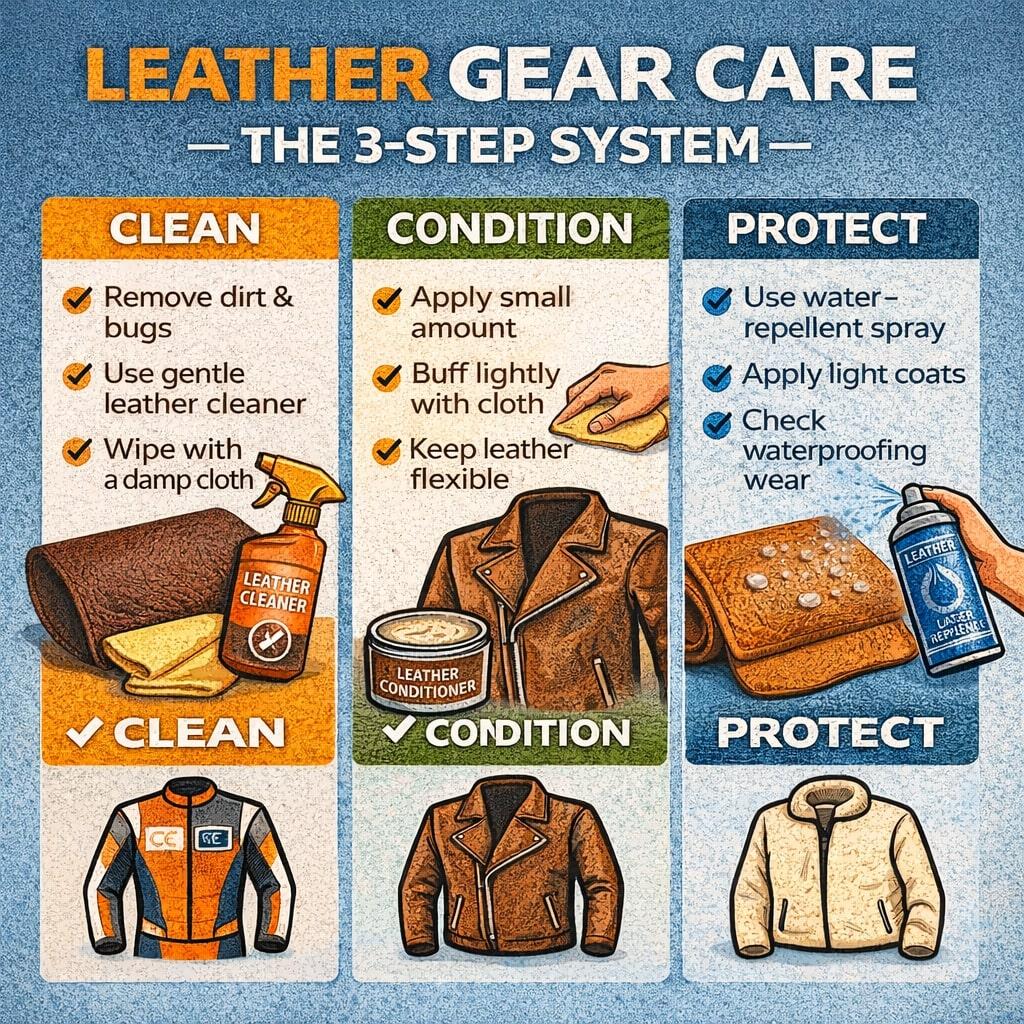
Good leather gear care does three big things:
- Protects strength by preventing drying and cracking.
- Keeps comfort by stopping stiffness and rough patches.
- Maintains looks so your jacket stays rich and clean.
Your Simple Weekly Care Routine
You don’t need a big routine. You need consistency. A little care every week beats a deep clean once a year.
Weekly Checklist (5 Minutes)
- Wipe bugs and road grime with a damp microfiber cloth.
- Air out the suit or jacket after riding.
- Check seams, zippers, and stretch panels for damage.
Monthly Checklist (15 Minutes)
- Light cleaning of high-contact areas (neck, cuffs, inner arms).
- Conditioning if leather feels dry or looks dull.
How to Clean Leather Gear Safely
Cleaning leather is not the same as cleaning fabric. Many riders ruin leather by using harsh soaps. Others soak it in water. Both are mistakes.
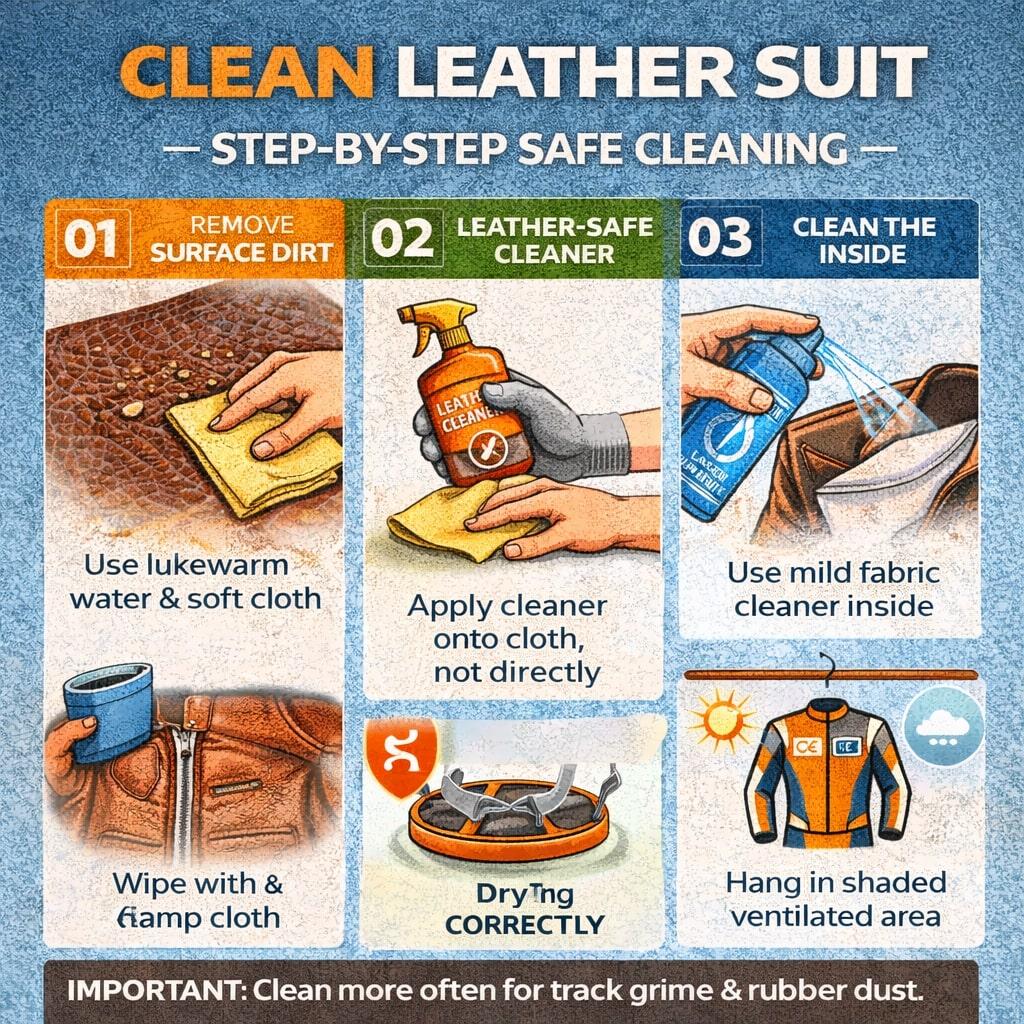
Step 1: Remove Surface Dirt
Use a soft cloth with lukewarm water. Wipe gently. Do not scrub hard.
Step 2: Use a Leather-Safe Cleaner
Apply cleaner onto the cloth, not directly onto the leather. Clean in small circles. Focus on dirty zones like elbows and knees.
Step 3: Clean the Inside Too
For liners, use a mild fabric-safe spray or wipe-down. Sweat salts damage leather stitching over time.
Step 4: Dry Correctly
Never use a heater or direct sunlight. Hang your gear in a shaded, ventilated place.
Important: If you ride in track conditions, clean the suit more often. Track grime includes rubber dust and fuel residue.
How to Condition Leather Without Overdoing It
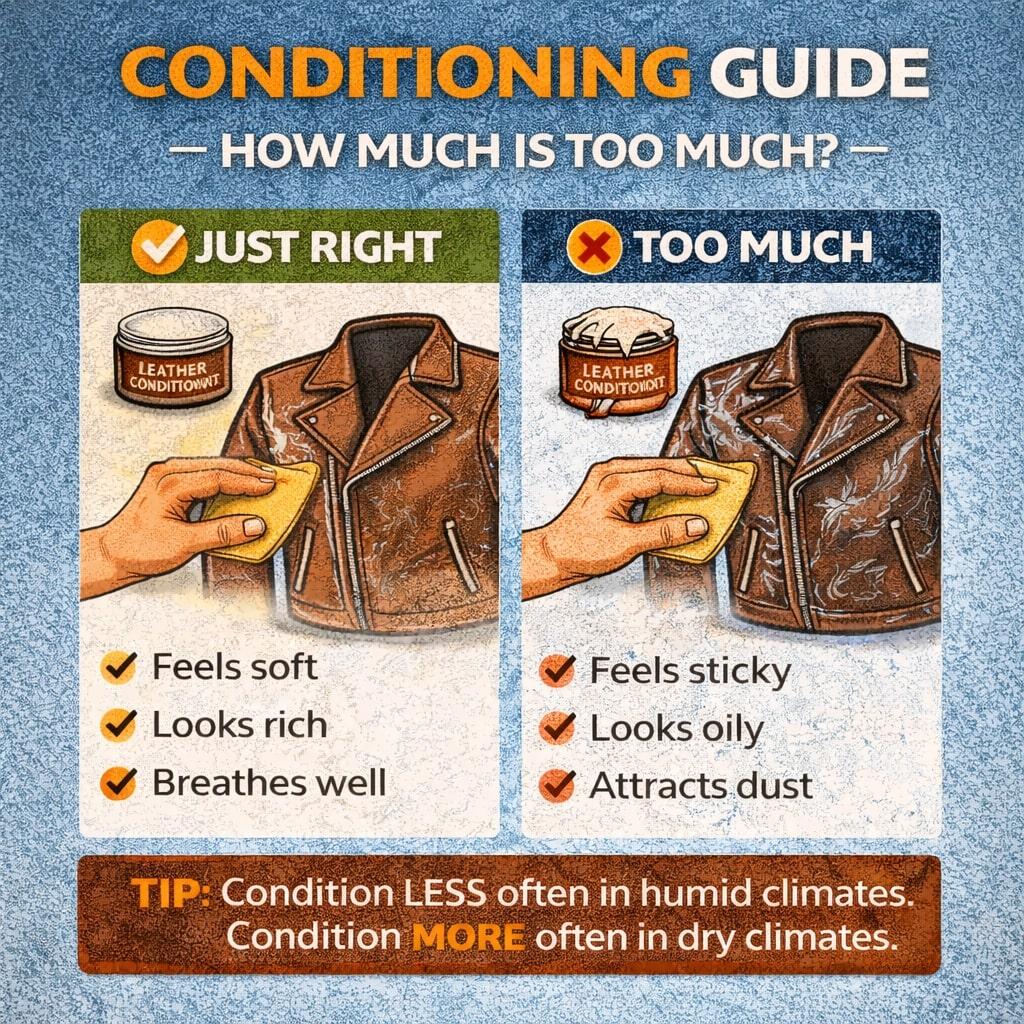
Conditioning keeps leather flexible. It replaces oils lost from heat, sweat, and time. But too much conditioner makes leather sticky and heavy.
When Do You Need Conditioner?
- Leather feels stiff.
- Leather looks faded or dry.
- Small creases look pale or dusty.
How to Condition Correctly
- Use a small amount on a cloth.
- Apply a thin layer only.
- Let it absorb for 20–30 minutes.
- Buff lightly with a clean cloth.
Tip: Condition less often in humid climates. Condition more often in dry climates.

Waterproofing Tips That Don’t Ruin Leather
Leather can handle light rain, but heavy rain is different. Water doesn’t “destroy” leather instantly, but repeated soaking causes hardening and cracking.
Rule 1: Use the Right Waterproofing Product
Choose a breathable water-repellent spray or wax designed for leather riding gear. Avoid silicone-heavy sprays that block pores.
Rule 2: Clean Before Waterproofing
Waterproofing traps dirt if applied on dirty leather. Always clean first.
Rule 3: Test on a Small Area
Test inside a cuff or lower hem. Some products darken leather slightly.
Rule 4: Apply Light Coats
Two light coats beat one heavy coat. Let it dry between coats.
Drying & Storage Rules
Drying is where most damage happens. Riders try to “speed up” drying with heat. Heat cooks leather oils and causes cracking.
Correct Drying Method
- Hang on a wide hanger.
- Keep away from direct sunlight.
- Let air circulate naturally.
Storage Rules
- Store in a cool, dry closet.
- Never store in plastic bags.
- Use a breathable garment bag if needed.
Pro tip: Stuff sleeves lightly with clean paper to hold shape. Avoid newspapers because ink can transfer.
Do’s and Don’ts (Save Your Gear)
Do
- Wipe down after rides.
- Condition when dry.
- Use leather-safe products.
- Air it out after sweating.
Don’t
- Don’t machine wash leather gear.
- Don’t soak it in water.
- Don’t use dish soap or bleach.
- Don’t dry with heat guns or radiators.

Product Recommendations & What to Avoid
I won’t push random products. I’ll tell you what matters in a product so you can choose correctly.
What a Good Leather Cleaner Should Have
- pH-balanced formula
- No harsh alcohol or bleach
- Designed for leather garments
What a Good Conditioner Should Do
- Absorb quickly
- Restore softness
- Not leave oily residue
What to Avoid
- Silicone-heavy waterproof sprays
- Household detergents
- Petroleum-based oils
Want gear built for longevity from day one?
Conclusion: Keep Your Leather Looking New
Leather rewards the rider who respects it. If you follow the steps in this guide, your gear will stay strong, comfortable, and sharp for years.
Clean gently. Condition lightly. Waterproof smartly. Dry patiently.
by building this routine into your riding life.
FAQs
How often should I clean leather riding gear?
Wipe it weekly and deep clean monthly, or more if you ride hard and sweat often.
Can I use regular soap to clean a leather suit?
No. Regular soap can strip oils and dry out the leather.
Should I waterproof leather gear?
Yes, but only with a leather-safe product. Apply light coats after cleaning.
What happens if leather gets wet?
Dry it naturally in shade. Then condition lightly after it fully dries.
Can I condition leather too much?
Yes. Over-conditioning can soften leather too much and attract dust.