 Canada
  Brazil
  Germany
  France
  Italy
Italy  Switzerland
  Sweden
  Spain
Spain  Great Britain
  Norway
  Russia
  South Africa
  Japan
Japan  New Zealand
  Australia

I still remember the sound of my first slide. Asphalt scraping against leather, sparks flying, and my heart racing. When I stood up, my suit was scratched but intact. That’s when I realized—motorcycle racing suit safety isn’t just about looking cool; it’s about surviving the crash.
Behind every CE-certified suit lies real engineering—designed to absorb impact, resist abrasion, and stay together under extreme pressure. Let’s break down the science that keeps riders alive.
Table of Contents
- Why Motorcycle Racing Suit Safety Matters
- Understanding CE Certification Levels
- Impact Zones Explained
- The Power of Protection Materials
- Triple Stitching: Small Threads, Big Protection
- How Modern Armor Works
- How CE Suits Are Tested
- Why Custom Fit Equals Better Safety
- Suit Maintenance and Replacement
- Conclusion
- FAQs
Why Motorcycle Racing Suit Safety Matters
According to European road safety studies, proper riding gear can reduce serious injury by 63%. Your suit is your armor—designed to take the hit, not your skin. The best protective leather gear combines flexibility and strength, allowing you to ride confidently while staying protected.
Understanding CE Certification Levels
The term “CE certified” isn’t just marketing—it’s a European safety benchmark that ensures your suit has passed strict laboratory tests for abrasion, tear, and impact resistance.
CE Certification Levels Explained
- Level A: Light protection for casual rides or city use.
- Level AA: Balanced safety and comfort, perfect for sport-touring riders.
- Level AAA: The highest level, built for track racing and extreme conditions.
For example, meet the AAA level, using advanced materials tested under EN 17092 standards.
Impact Zones Explained
Every crash tells a story—and most start with the same areas: shoulders, knees, and elbows. CE standards divide the human body into four impact zones to design armor placement logically.
The Four CE Impact Zones
- Zone 1: Shoulders, elbows, knees, and hips must have CE Level-2 armor.
- Zone 2: Outer arms, thighs, and back—reinforced with extra padding.
- Zone 3: Chest and abdomen—lighter materials for comfort and airflow.
- Zone 4: Non-critical areas like cuffs and collars—focused on flexibility.


The Power of Protection Materials
Every suit is a complex blend of strength and science. The outer shell fights abrasion, while the inner layers absorb energy and keep you cool.
Cowhide Leather – Proven Durability
Cowhide remains the most used leather in racing. It can resist sliding on asphalt for up to 4 seconds before tearing, providing outstanding abrasion resistance.
Kangaroo Leather—Lightweight but Strong
Kangaroo leather offers 20–30% more tensile strength than cowhide, yet it’s lighter—giving professional riders the freedom to move naturally.
Kevlar and Stretch Panels
Kevlar fabrics in high-stress zones prevent tearing. Stretch panels in elbows, groin, and knees ensure agility without compromising safety.
Inner Liners and Mesh
Breathable mesh liners wick sweat away, while foam padding adds comfort and reduces vibration during long rides.
Triple Stitching: Small Threads, Big Protection
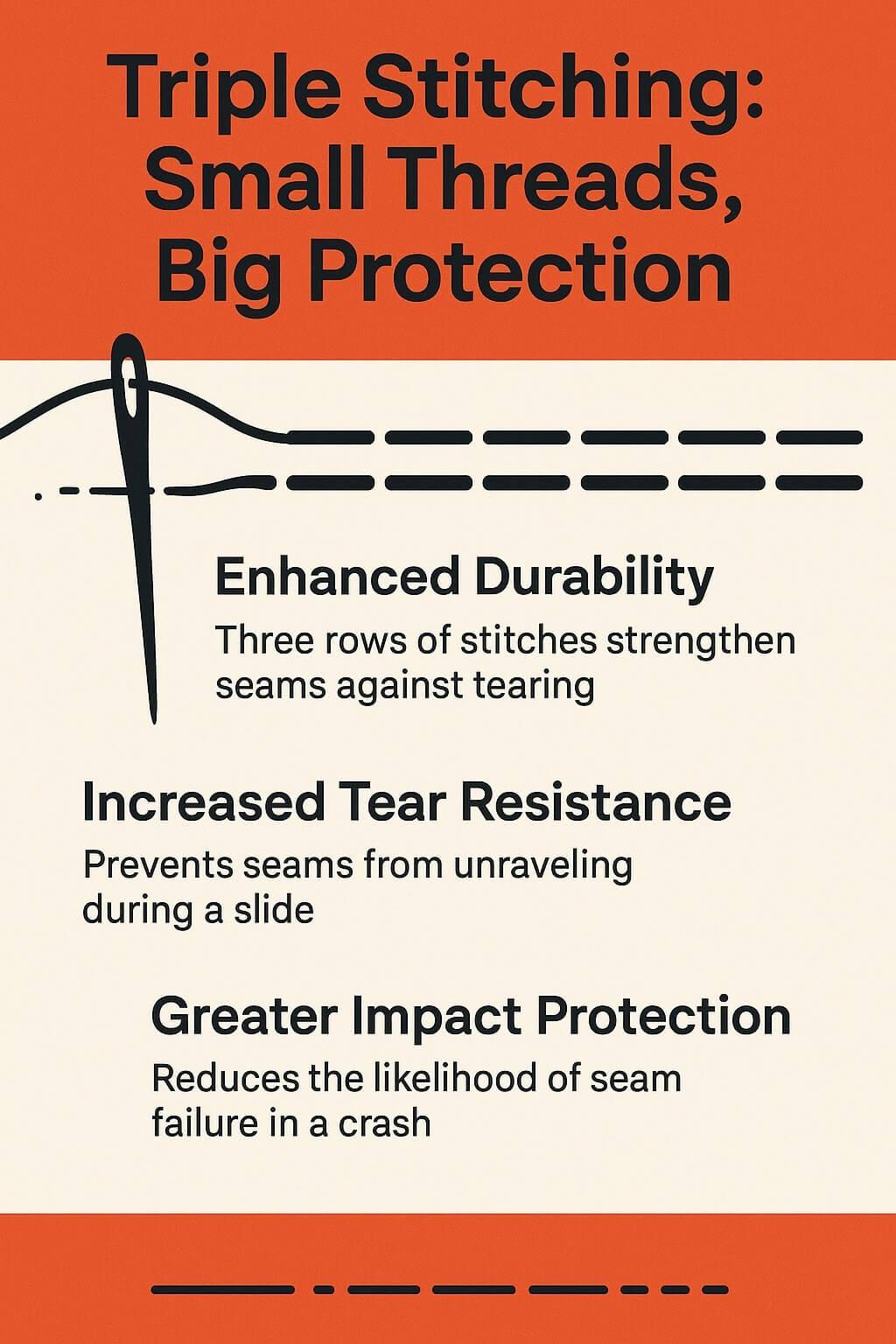
Armor and leather mean nothing if the seams fail. During impact, seams face massive stress. That’s why triple stitching is essential for high-performance suits.
How Triple Stitching Works
Each critical seam is stitched three times using high-tensile nylon or polyester thread. If one line snaps, the others hold—preventing the leather from tearing apart.
Real-World Safety Data
In MotoGP crash analyses, suits with triple stitching had 45% fewer seam failures compared to single-stitched gear. That’s why every Leather Collection racing suit includes reinforced triple-sewn panels in all major impact areas.
How Modern Armor Works
Modern CE armor uses viscoelastic polymers that stay flexible during movement but instantly harden under impact. This technology allows freedom and safety to coexist.
Armor Levels Explained
| Armor Type | Max Force Transmitted | Recommended Use |
|---|---|---|
| Level 1 | Below 35 kN | Street or daily use |
| Level 2 | Below 20 kN | Track or professional racing |
Additional Armor Types
- Back Protectors: Disperse spine impacts over larger areas.
- Chest Shields: Absorb frontal shocks from collisions.
- Hip/Knee Pads: Protect joints against side slides.
How CE Suits Are Tested
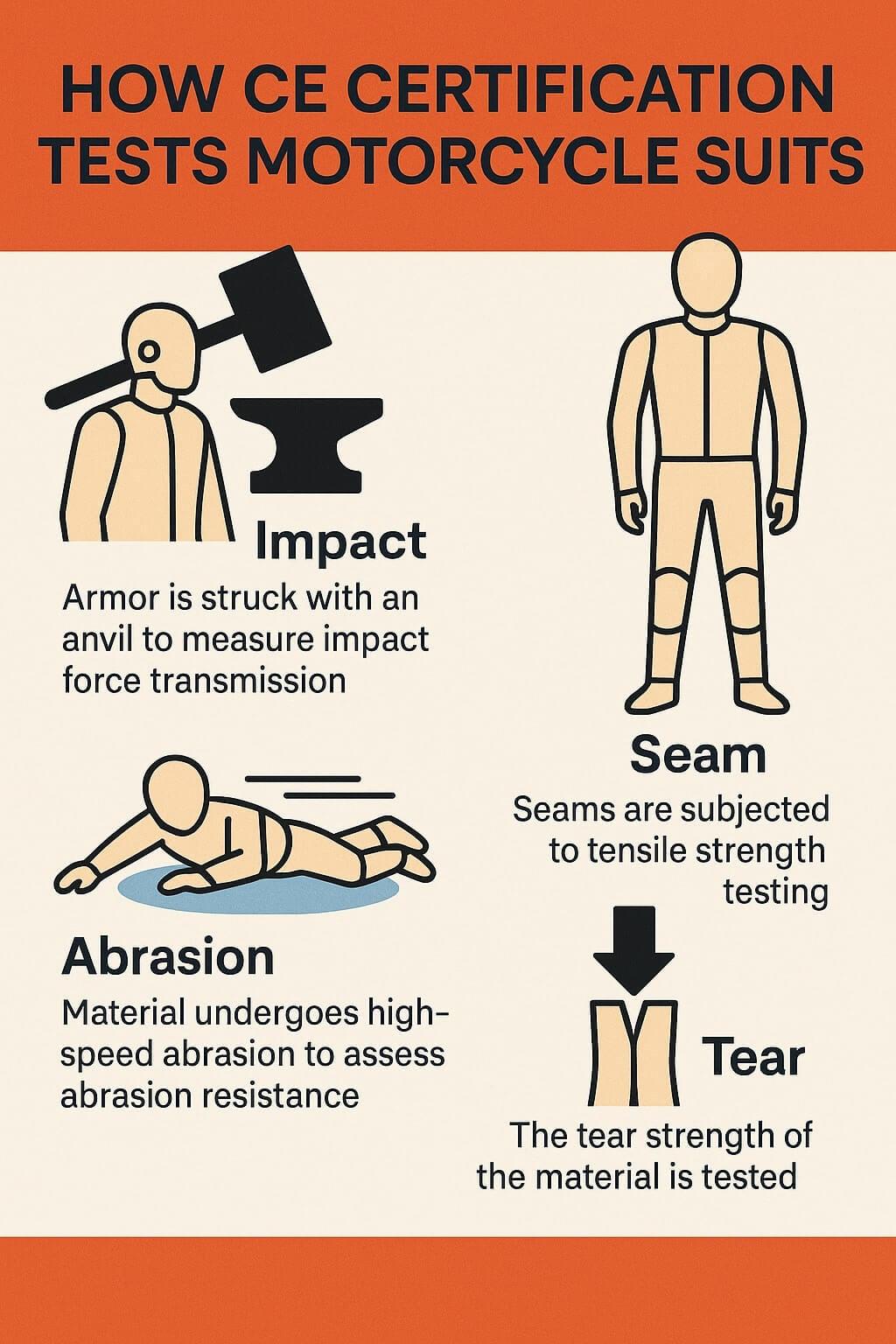
Before a suit earns CE approval, it must survive brutal mechanical tests that mimic real-world crashes.
Common CE Test Methods
- Abrasion Test: Measures slide time before material failure.
- Tear Strength Test: Evaluates how seams and fabrics resist ripping.
- Burst Test: Tests air-pressure strength of seams.
- Impact Test: Measures how much force armor transmits to the body.
Why Custom Fit Equals Better Safety
A protective suit works best when it fits perfectly. Loose armor can shift during a crash; tight suits restrict movement. That’s why professional riders choose —crafted to match exact body measurements.
A tailored fit ensures that armor sits precisely on your joints, improving protection and comfort on every ride.

Suit Maintenance and Replacement
Care Tips
- Clean with a damp cloth and mild soap—avoid soaking.
- Use leather conditioner to prevent cracking.
- Check seams and zippers regularly.
- Replace armor after any crash.
When to Replace Your Suit
- After a heavy fall or visible seam damage.
- When leather feels stiff or loses flexibility.
- If armor no longer fits tightly or cracks appear.
Conclusion: Science, Safety, and Strength in Every Stitch
Every motorcycle racing suit tells a story of innovation. From CE-certified armor to triple stitching, every detail is built to protect you from the unexpected. These suits aren’t just gear—they’re engineered lifelines.
When you choose a high-quality, custom-fitted suit, you’re not just buying leather—you’re investing in survival. Explore the full Motorbike Racing Suit Collection or create your own custom racing suit today.
FAQs About Motorcycle Racing Suit Safety
What does "CE certified" mean?
It means the suit meets European safety standards for abrasion, impact, and tear resistance under EN 17092 or EN 1621 testing.
What’s the difference between Level 1 and Level 2 armor?
Level 2 armor absorbs more impact, transmitting less force to your body—ideal for high-speed or track use.
Why is triple stitching so important?
It prevents seams from splitting during a crash, keeping your suit intact and your skin protected.
Can I replace the armor in my suit?
Yes, most modern suits have removable pockets for upgrading or replacing armor inserts.
How long does a leather racing suit last?
With proper care, a quality leather suit can last between 5 and 10 years, depending on riding conditions and crash history.
Written by the Leather Collection Editorial Team—dedicated to safety, craftsmanship, and innovation for every rider.