
 Canada
  Brazil
  Germany
  France
  Italy
Italy  Switzerland
  Sweden
  Spain
Spain  Great Britain
  Norway
  Russia
  South Africa
  Japan
Japan  New Zealand
  Australia

What Is CE Armor and Why It Matters for Motorcycle Riders
I remember the first time I opened a motorcycle jacket and saw removable armor inside. At that time, I didn’t understand what “CE certified” meant. I only cared about how the jacket looked. That was a mistake.
Today, I understand that CE-armor motorcycle protection is one of the most important features in any serious riding jacket or suit. It is not decoration. It is not marketing. It is engineered protection designed to absorb impact energy before your body does.
This guide explains what CE armor really means, how it works, and why it plays a major role in real rider protection.
Table of Contents
What Is CE Armor?
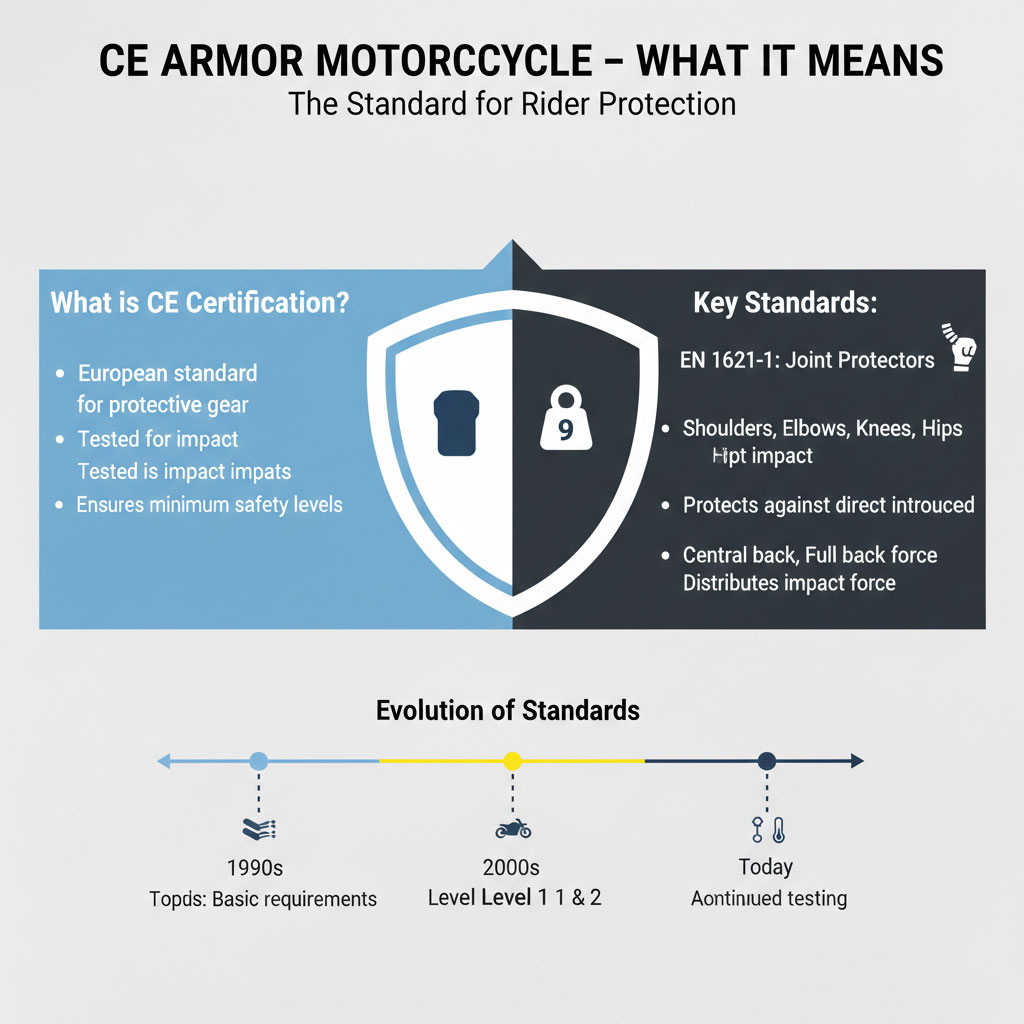
CE stands for “Conformité Européenne.” It means the product meets European safety standards.
In motorcycle gear, CE armor refers to protective inserts tested to absorb impact energy. These inserts reduce the force transferred to your body during a crash.
Without armor, your joints and bones take the full impact. With certified armor, energy spreads across the material, reducing injury risk.
How CE Armor Is Tested
CE armor is tested under strict laboratory conditions.
Impact Testing Process
- A weighted striker drops onto the armor.
- Sensors measure how much force passes through.
- The lower the transmitted force, the better the protection.
Only armor that meets required force limits receives certification.
This is not guesswork. It is measured science.
CE Level 1 vs Level 2
Not all motorcycle jacket armor is the same.
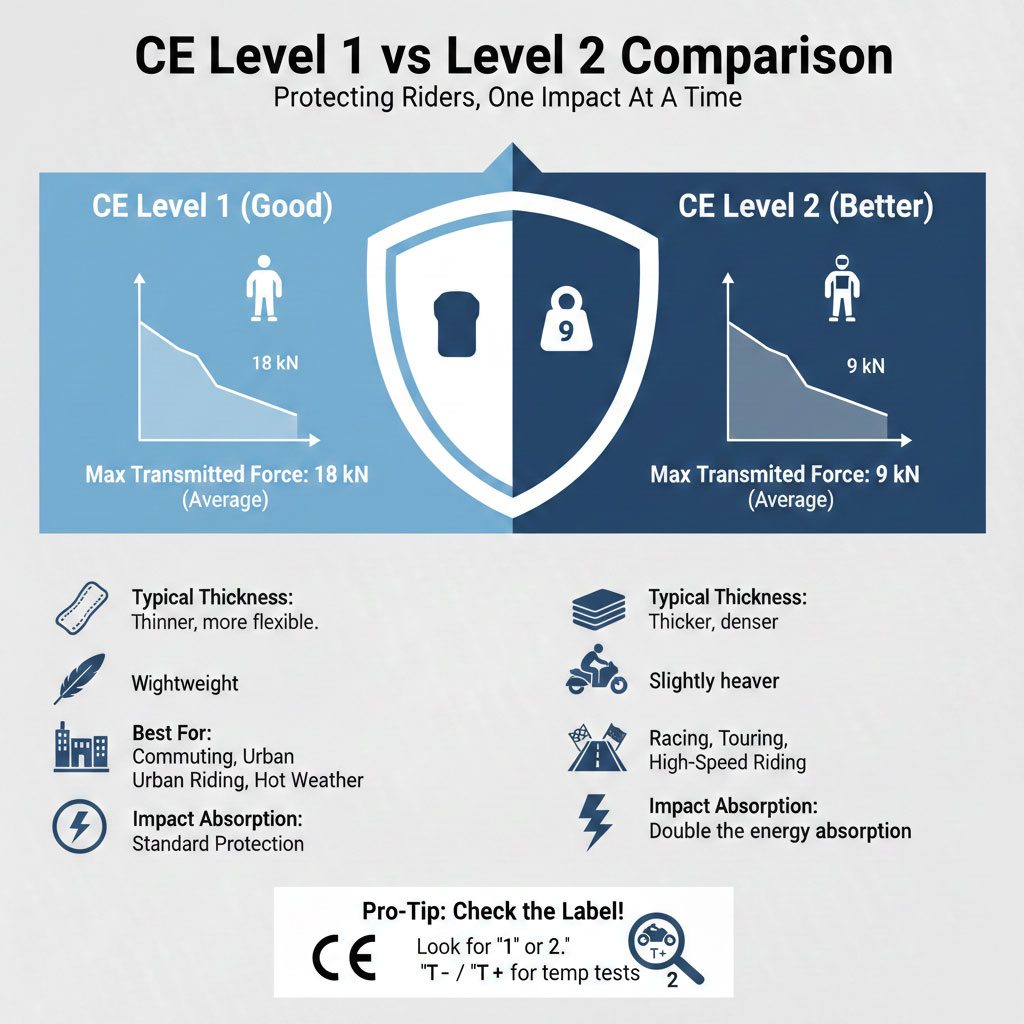
CE Level 1
- Allows slightly higher force transmission
- Lighter and more flexible
- Common in entry-level jackets
CE Level 2
- Reduces more impact force
- Offers higher protection
- Recommended for high-speed riding
If safety is your priority, Level 2 offers stronger protection.
Where CE Armor Is Placed
Armor only works if placed correctly.
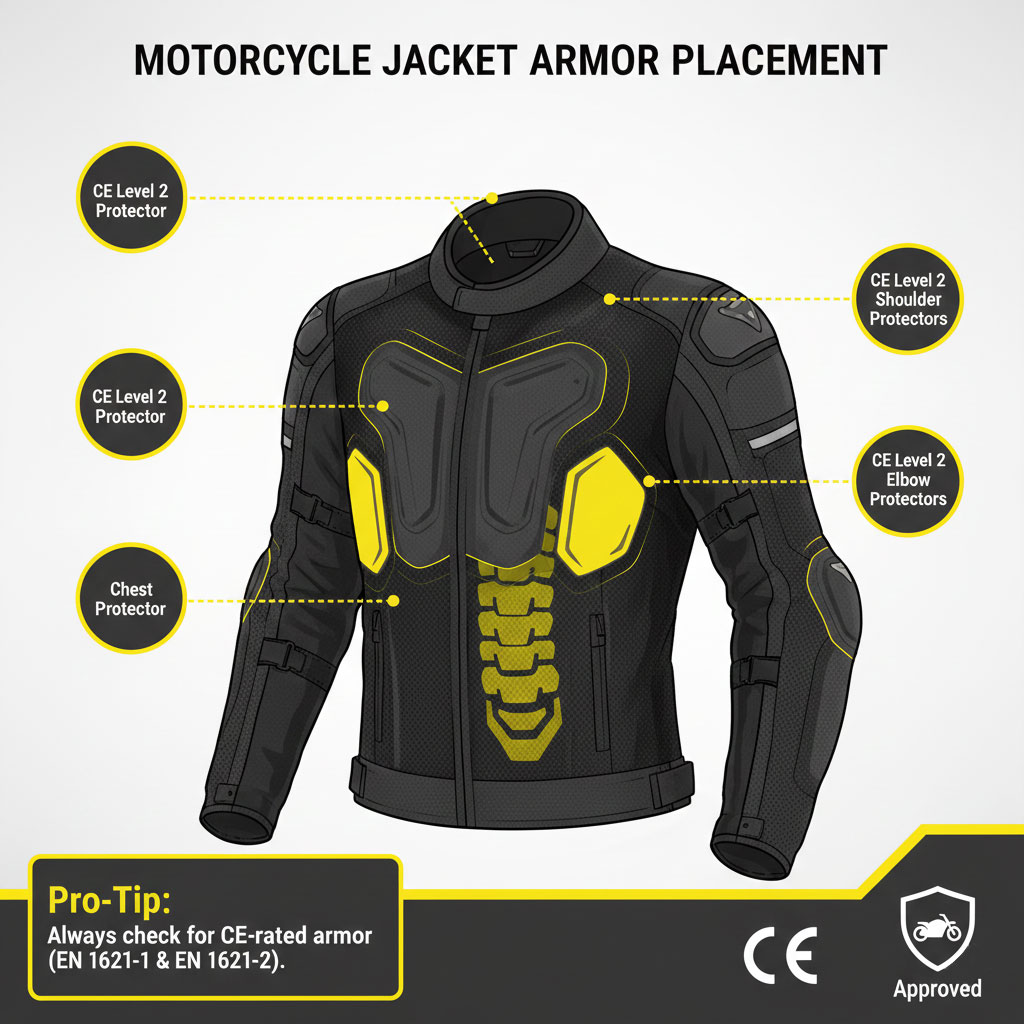
Key Impact Zones
- Shoulders
- Elbows
- Back
- Chest (optional)
- Knees (in suits)
These areas experience the highest impact during falls.
Proper placement ensures energy absorption happens exactly where needed.
What CE Armor Is Made Of
CE armor motorcycle protection uses advanced materials.
Common Materials
- Viscoelastic foam
- Polyurethane-based protectors
- Energy-reactive materials
These materials stay flexible during normal movement but stiffen instantly on impact.
This balance between comfort and protection is critical.
Why Fit Matters for Armor Performance
Armor only protects when it stays aligned.
If a jacket is too loose, armor shifts. If too tight, armor may not sit correctly.
This is why tailored jackets and proper sizing matter.
Custom Motorcycle Leather Race Suits
Proper fit keeps armor exactly over impact zones.
Can You Upgrade Motorcycle Jacket Armor?
Yes. Many jackets allow armor upgrades.
Upgrade Benefits
- Switch Level 1 to Level 2
- Add chest protectors
- Install upgraded back protectors
Before upgrading, check pocket compatibility and sizing.
Never force armor into a pocket not designed for it.
Conclusion: Protection Is Not Optional
CE armor motorcycle protection is not a luxury. It is a necessity.
Every ride carries risk. Certified armor reduces that risk in measurable ways.
Good leather protects from abrasion. Armor protects from impact. You need both.
Choose a designed to support proper armor.
FAQs
Is CE armor mandatory?
It depends on your country, but it is strongly recommended for safety.
Can I wash armor?
No. Remove armor before washing the jacket.
Is Level 2 always better?
Yes, for impact protection, though slightly thicker.
Does leather alone protect?
Leather protects against abrasion, not impact. Armor handles impact.
Can armor expire?
Yes. Over time, materials may degrade. Inspect periodically.